Step 1Consultation
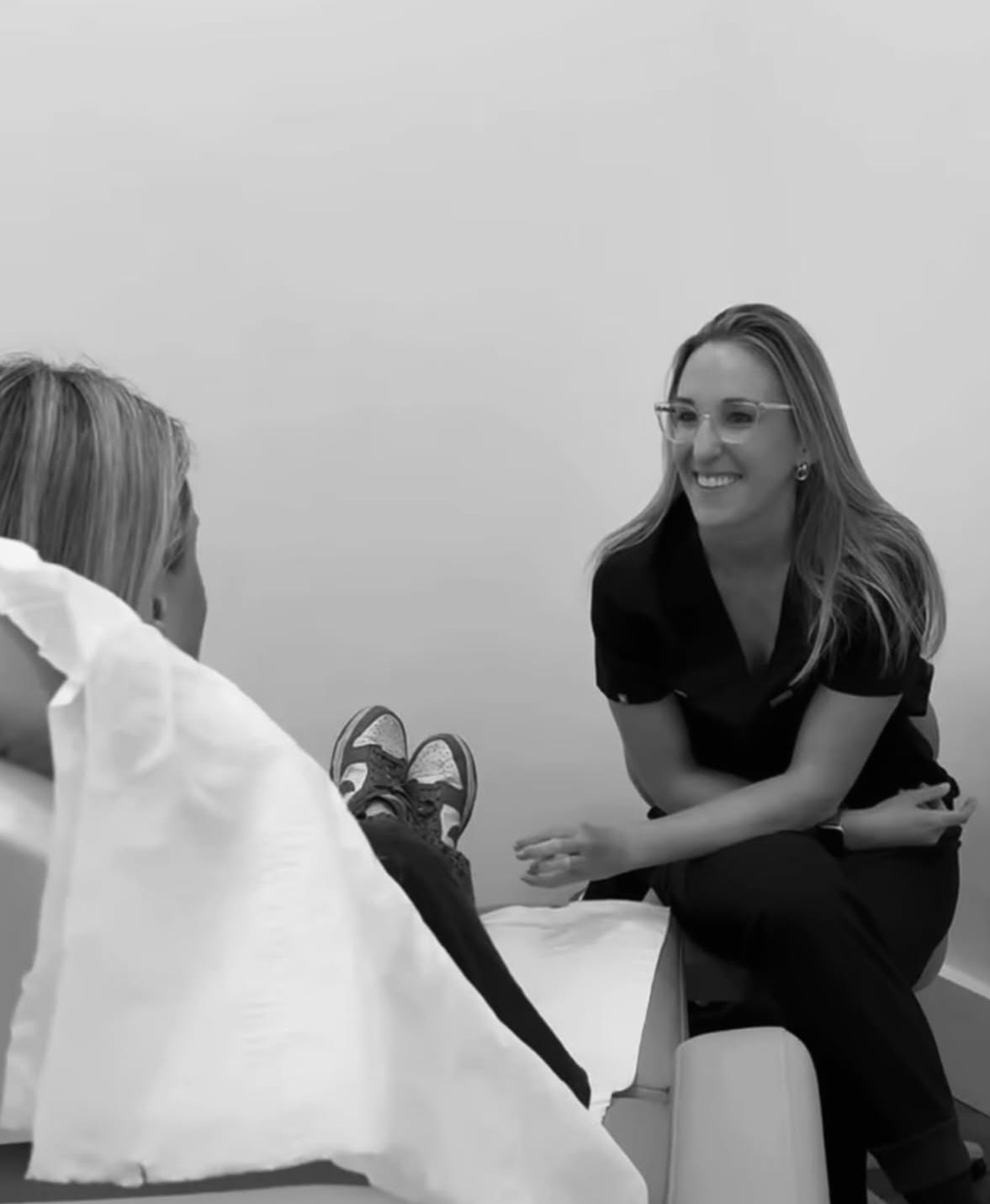
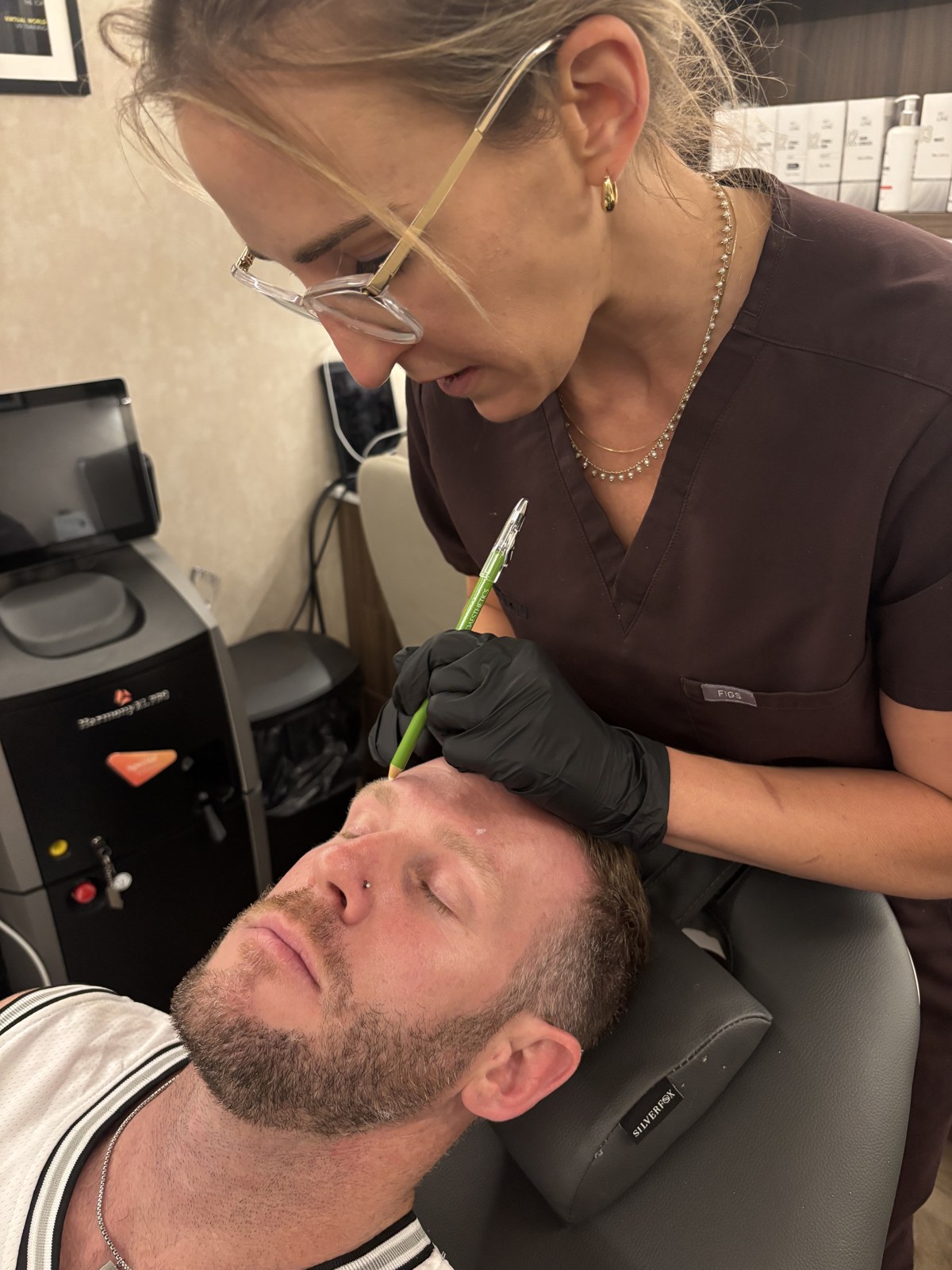
A qualified prescribing clinician discusses your concerns, goals and medical history, and examines the area.
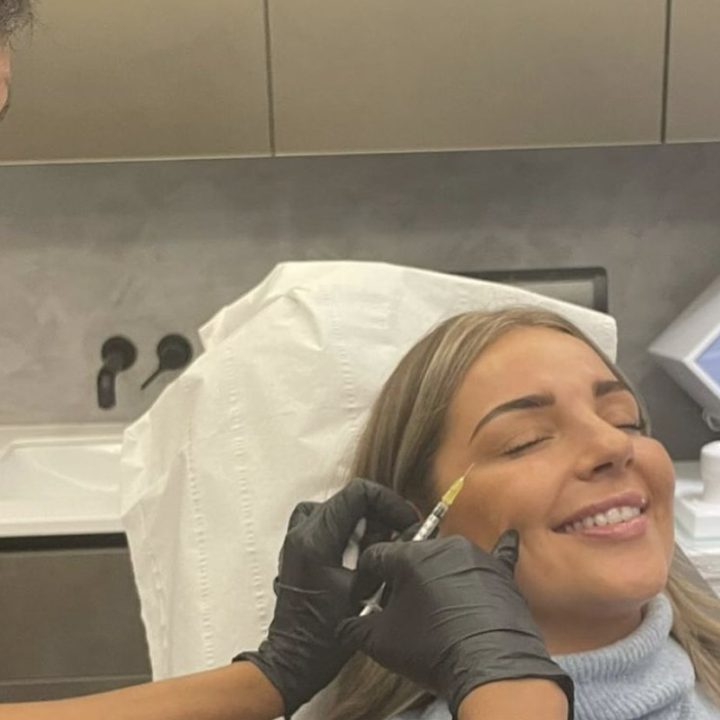
Botox® is the brand name of a botulinum toxin type A medicine made by AbbVie (Allergan). It is a prescription-only medicine given by injection into specific muscles.
Its doses are measured in Allergan Units. These units are specific to Botox® and are not interchangeable with the units of other botulinum toxin products.
Botulinum toxin type A temporarily blocks the nerve signals that cause the injected muscle to contract. This reduces the muscle movement that creates certain lines. The effect wears off over time as nerve function returns, so it is not permanent.
A qualified prescribing clinician discusses your concerns, goals and medical history, and examines the area.

Your clinician explains the potential benefits, risks, limitations and alternatives, and decides whether any prescription treatment is appropriate for you. You are under no obligation to proceed.
If treatment goes ahead, you receive written aftercare advice and a review is arranged. Contact the clinic, or seek urgent medical help, if you have any of the symptoms listed under risks.
Limitations. Effects are temporary and repeat treatment is needed to maintain them. For facial lines, treatments should not be given more often than every 3 months, and the safety and effectiveness of repeated treatment beyond 12 months has not been studied. Information for people over 65 is limited. Use outside the licensed indications is called off-label use, and your clinician will tell you if this applies.
Common side effects (up to 1 in 10 people) for facial lines include headache, drooping of the eyelid or eyebrow, injection-site bruising, swelling, pain or redness, tingling, nausea, a feeling of skin tightness and a raised outer eyebrow. Most occur in the first few days.
The effect of the toxin can spread beyond the injection site. This can cause muscle weakness, difficulty swallowing, speaking or breathing, which can be serious. Symptoms can appear hours to weeks after injection. Seek medical help straight away if they occur. Serious allergic reactions have also been reported.
Information based on the UK Summary of Product Characteristics for BOTOX® 50 Allergan Units (AbbVie Ltd), text revised 15 May 2026. Read the SmPC on the electronic medicines compendium. This page does not replace the patient information leaflet or advice from your prescriber.
Botox® must not be used if you are allergic to botulinum toxin type A or any ingredient, or if you have an infection at the injection site. Extra caution, and specialist assessment, is needed if you have a condition affecting the nerves and muscles (such as myasthenia gravis, Lambert-Eaton syndrome, motor neurone disease or motor neuropathy), or a history of difficulty swallowing or inhaling food or liquid. Tell your clinician about all medicines you take, including blood thinners and antibiotics.
No. Botox® is not recommended during pregnancy or for women who could become pregnant and are not using contraception, and its use while breastfeeding cannot be recommended.
Seek medical help straight away if you have difficulty swallowing, speaking or breathing, generalised muscle weakness, or signs of a severe allergic reaction such as swelling of the face or throat, wheezing or a rash. Contact the clinic about any other side effect that worries you.
No. Each botulinum toxin product is a separate medicine with its own licence, dosing units and product information. Doses cannot be converted directly between products.


Precision lip augmentation by @drmegan_cultskin
.
📍@cultskin Esher
Aug 15

Two generations. Two different skin journeys. One CULT. 🤍
.
📸 : @rubeylalia
.
Mum & daughter, both choosing to invest in themselves at CULTSKIN Newcastle.
Because great skin has no age.
And expert treatment should never be one-size-fits-all.
Different ages. Different ethnicities. Different concerns. Different goals.
Our approach has always been about understanding the individual in front of us their skin, their anatomy, their story and creating a treatment journey that feels right for them.
From prevention to restoration, subtle enhancement to skin longevity, we’re proud to treat a beautifully diverse community of patients across every generation.
This is what modern aesthetics should look like.
Individual. Inclusive. Expert-led.
Welcome to the CULT. 🖤
#CULTSKIN #CULTSKINNewcastle #SkinLongevity #InclusiveAesthetics #MedicalAesthetics NewcastleAesthetics SkinHealth
Aug 13
When your skin speaks for itself.
📸 : @leomieanderson
Supermodel Leomie Anderson revealed to the Daily Mail that when it comes to her skin, she comes to CULTSKIN® Esher for microneedling.
Her reasons? Pigmentation. Texture. Breakouts.
In her words:
“I think micro needling is great because it helps with pigmentation. It helps with the texture of your skin and helps with breakouts.”
Good skin isn’t about chasing perfection. It’s about understanding your skin and choosing treatments that work with it.
CULTSKIN® ESHER 📍 @thefitpartnership
Skin longevity consultations available.
JOIN THE CULT®
Aug 13
Some messages say everything.
For me, lip augmentation has never been about making lips bigger.
It’s about shape.
Proportion.
Architecture.
And creating a result that still feels right long after you leave the clinic.
It’s @thecultmethod
Aug 10
THE CULT INSIDER
What do the people who work with the best choose for themselves?
📸 : @drlaura_cultskin
Meet Dr Laura — and her personal @CULTSKIN treatment plan.
When you spend your days treating faces, you know that the best results aren’t about doing more. They’re about choosing the right treatments, in the right places, at the right time.
Dr Laura’s CULTSKIN favourites:
• Profhilo® — hydration + skin quality
• Anti-wrinkle treatment — 3 areas
• Lip augmentation — subtle definition & balance
• Midface filler — support and contour
• Chin filler — profile balance
• Marionette filler — lower-face support
- Innoaesthetics skin care
All personally treated by the boss, @drtijionesho
The result? Still Laura. Just refreshed, balanced and very CULT.
One of the perks of working with the best. 🖤
Who from the CULTSKIN team should we reveal next?
#CULTSKIN #JoinTheCULT #TheCULTInsider #DrEsho #AestheticMedicine Profhilo FacialBalancing SkinLongevity
Aug 9
Get to know your @cultskin team !
.
📸 : @marsinta_cultskin
.
Eager to learn and develop her skills, Marsinta has progressed through the beauty and aesthetics industry for over 10 years, through Greece and the UK, the latter for the past 6 years. Gentle-natured, social and appreciating the significance of natural beauty within the industry, she is perfectly aligned with the CULTSKIN® way of achieving results. In her spare time, you can find Marsinta by the beach playing Volleyball, getting active with MMA, Kick Boxing or Tennis in the summertime and studying Architecture and Interior Design.
Jul 27
We asked @marika_cultskin what her favourite treatments for the summer and festival skin are … what are yours ? 📍@cultskin | Summer session offers end in a few weeks so get them while they are still here !
Jul 27
What do you learn after treating thousands of patients?
Every face tells a story, and every treatment teaches you something new.
In this reel, @drmegan_cultskin shares some of the lessons she’s learnt from treating thousands of patients throughout her career from understanding that great results start with skin health, to why natural, personalised treatments will always outperform trends.
With a background in internal medicine, extensive aesthetic experience in South Africa, and now practising across our Fitzroy Square (London) and Esher clinics, Dr. Megan combines science, artistry, and evidence based care to help patients age confidently.
As part of our CULTSKIN® Next Gen Doctors programme, she now is a full associate doctor and continues to refine her expertise under the mentorship of @drtijionesho, with a particular passion for advanced injectables, regenerative medicine, polynucleotides, and exosome therapies.
Because great aesthetic medicine isn’t about changing who you are it’s about understanding what your skin truly needs.
📍CULTSKIN® London | Fitzroy Square
📍CULTSKIN® Esher
What has your own skin journey taught you? Let us know below. 👇
#CULTSKIN #DrMeganFranklin #SkinLongevity #RegenerativeAesthetics #AestheticDoctor LondonAesthetics Esher FitzroySquare SkinHealth Polynucleotides Exosomes NaturalResults AgeBetter AntiAgeing LuxuryWithoutTheExcess
Jul 13
LIP 101 with @drloraine_cultskin 📍Newcastle clinic
.
Natural results > Fake results
.
What CULT lips via @thecultmethod , book now for your signature treatment at our Newcastle , London or Surrey clinic today. LINK IN BIO
Jul 13
London Clinic ✅
.
📸 : @drmegan_cultskin
.
Dr Megan completed her first London clinic today and now is officially at BOTH or Esher and London clinic sites
.
Book now via the link in the bio
Jul 6
BTS : Our @elena_cultskin in action with our signature regenerative microneelding advanced facial with exosomes
.
📸 : @nicolaadams
.
Available as part of our Summer sessions offers at @cultskin
Jul 6
#Repost @goodsalonguide
・
Acne is one of the most common skin concerns, but breakouts on the buttocks (often caused by folliculitis) can be especially uncomfortable and persistent - especially in the hot summer months.
For those experiencing recurring butt acne, a consistent treatment and skincare approach can be key to improving skin quality and confidence.
Through personalised consultations and tailored treatment plans, CULTBODY by @cultskin helps address concerns commonly associated with body breakouts, including uneven skin texture, post-blemish marks, ingrown hairs and skin congestion.
Technologies such as advanced microneedling, radiofrequency treatments and laser hair removal can support smoother, healthier-looking skin, while regular progress tracking and expert-led care ensure treatments are adapted to individual needs. Combined with a dedicated at-home skincare routine, CULTBODY offers a comprehensive, year-round approach to maintaining clearer, more confident skin.
CULTBODY Membership starts from £250 and is available at CULTSKIN.com.
#CultSkin #CultBody #GoodSalonGuide #GoodBeautyGuide
Jul 4
When we first started this journey, the ambition was never to build a celebrity clinic.
It was to build a brand that people trusted.
Looking back at just the past few weeks, it’s been a privilege to welcome such a diverse group of people through our doors—from PGA Champion @georgiahall23 l, Olympic boxing champion @nicolaadams , actress @kathryndrysdale , broadcaster @yasminevans , entrepreneur and Topicals founder @olamideaolowe , @patriciabright and @mrscmcguinness .
Different industries.
Different journeys.
Different skin goals.
One shared expectation: expert care, natural results and a personalised approach.
That has always been the vision behind @CULTSKIN.
Not to be known for who visits us, but for the standard of care that keeps people coming back and recommending us to others.
Whether you’re an elite athlete, an entrepreneur, a performer, a broadcaster or someone simply wanting to feel more confident in your own skin, our philosophy remains the same: personalised care, regenerative treatments and results that look naturally you.
To every patient who has trusted our team with their skin whether you’re in the public eye or not thank you.
You’ve all helped shape the @CULTSKIN story, and we’re only just getting started.
#Leadership #BrandBuilding #Entrepreneurship #PatientExperience #SkinLongevity RegenerativeAesthetics Cultskin Trust BusinessGrowth
Jun 28
💉 @Drtijionesho Lip Longevity Tips 👄
Beautiful lips aren’t just about the treatment – they’re about how you care for them afterwards.
1. Hydrate from within
Many hyaluronic acid (HA) fillers are hydrophilic, meaning they attract and bind water. Staying well hydrated helps support the appearance and feel of your lips. Aim for at least 2 litres of water a day.
2. Hydrate from the outside
Keep your lips moisturised with a nourishing balm, ideally one containing hyaluronic acid and barrier-supporting ingredients. Healthy, hydrated lips help maintain a smooth finish and protect your results.
3. Protect your lips from UV
Sun exposure and sunbeds can dry and damage the delicate lip tissue. Use SPF on your lips whenever you’re outdoors and avoid unnecessary UV exposure to help preserve both your lips and your results.
4. Don’t chase the swelling
The swelling immediately after treatment isn’t your final result—it’s inflammation. Using a cool pack (as advised by your practitioner) can help minimise swelling and improve comfort. Allow your lips to settle naturally before deciding if you need any further treatment.
Save this post for your next appointment and share it with someone who’s thinking about lip filler.
JOIN THE CULT
Jun 27
There’s a reason the most beautiful results never look “done.”
.
Over the coming weeks, we’ll be taking you behind the scenes of Patricia Bright’s journey at @CULTSKIN, showcasing the next generation of regenerative aesthetics.
.
From advanced Exosome Therapy to our signature Natural Biofiller Rejuvenation, every treatment has one goal: to support your skin’s own ability to repair, restore and regenerate—creating results that are beautifully natural, never overdone.
.
No filters.
No dramatic transformations.
Just healthier skin, restored volume and confidence that speaks for itself.
.
As Patricia says:
“CULTSKIN is the only place I go for all my treatments. The best in London!”
This is the future of aesthetics.
Regenerative. Personalised. Natural.
Follow Patricia’s journey as we share each step, each treatment and the results along the way.
#JoinTheCult #CULTSKIN #PatriciaBright #Exosomes #NaturalBiofiller RegenerativeAesthetics SkinLongevity AestheticMedicine NaturalResults LondonAesthetics GlowDifferent
Jun 22
The best skin journeys aren’t built in a single appointment.
.
They’re built over years of trust, understanding and personalised care.
Broadcaster and radio presenter Yasmin Evans recently shared:
“Nobody else knows my skin like Annice at @CULTSKIN. We’ve worked around eczema, TSW & acne through the years and she always handles my skin with such love and care.”
For us, this is what it’s all about.
Not trends.
Not quick fixes.
Not one-size-fits-all treatments.
Just expert care, genuine relationships and a commitment to helping our patients feel confident in their skin.
Thank you Yasmin for trusting us with your skin journey, and thank you Annice for continuing to deliver the exceptional care that defines CULTSKIN ❤️
✨ Join THE CULT
📍 London | Esher | Newcastle
#JoinTheCult #Cultskin #YasminEvans #SkinHealth #SkinJourney Eczema TSW Acne SkinConfidence PatientExperience SkinLongevity
Jun 16
JOIN THE CULT.
One of the questions we’re asked most often is:
“How do I become a model for @CULTSKIN?”
Well, now is your chance.
From 1st–12th July, we’re opening a limited number of Doctor-Led Model Appointments as part of our first ever CULTSKIN Content Creation Week.
You’ll receive treatment from our expert team whilst taking part in professional photography, videography and content creation as we document real patient journeys and real transformations.
Featured Model Appointment Pricing:
• Anti wrinkle from £149
• Lip Enhancement from £199
• CULTSKIN Content Facial £150
Featuring premium dermal fillers and tailored treatment plans.
Available across London, Esher and Newcastle with:
London
• Dr Natalie Tabares | @drnat_cultskin
• Dr Zelu | @drzelu__cultskin
London & Esher
• Dr Megan Franklin | @drmegan_cultskin
Newcastle
• Dr Lorraine Hamilton | @drloraine_cultskin
Advanced Therapists
London
• Elena | @elena_cultskin
Newcastle
• Marika | @marika_cultskin
Appointments are strictly limited and available for new bookings only.
Full payment required at booking. Non-refundable. Content consent required.
To apply, comment “MODEL” below or send us a DM with the words “CONTENT WEEK”.
Real patients.
Real results.
Real transformations.
#JoinTheCult #Cultskin #ModelCall #ContentCreationWeek #DoctorLedAesthetics Restylane Hydrafacial SkinLongevity AestheticMedicine LondonAesthetics EsherAesthetics NewcastleAesthetics
Jun 16
Your daily reminder to book your skin reset with @cultskin
.
📸 : @yasminevans
.
From laser to peels to regenerative Microneedling sessions and more.. join the CULT. Link in the bio
Jun 16
BTS : @cultskin Newcastle : @drtijionesho teaching @drloraine_cultskin an introduction to @thecultmethod and creating CULTLIPS
.
Book your session with the team today with our 5 star doctor lead team. Link in the Bio
Jun 14
Even the ladies of Bridgerton are joining THE CULT…
.
📸 : @kathryndrysdale
.
Bridgerton star Kathryn Drysdale recently visited @CULTSKIN for our exclusive regenerative microneedling facial with @anniceling_cultskin and shared her experience with her followers:
“Had my first microneedling treatment today at @cultskin @dreshomd! Absolutely loved it ❤️”
Designed to improve skin texture, stimulate collagen production and support long-term skin health, regenerative microneedling has become one of the most sought-after treatments for those looking to invest in skin longevity.
No filters.
No downtime disguises.
Just healthier, stronger, more radiant skin.
Thank you Kathryn for joining THE CULT.
📍 London | Newcastle | Esher
#JoinTheCult #Cultskin #Bridgerton #Netflix #KathrynDrysdale Microneedling SkinLongevity RegenerativeAesthetics HarleyStreet GlowingSkin
Jun 11
Subtle changes | Not so subtle reactions 😅
.
Not every transformation needs to be dramatic to be impactful
Side profile changes are often about balance, not changing someone’s identity.
What changed here?
▫️ Softer profile line
▫️ Subtle tip refinement and support
▫️ Improved profile harmony
▫️ More balanced relationship between the nose, lips and chin
▫️ Natural result whilst maintaining facial character
The goal? To refine, not redefine.
Sometimes the smallest adjustments create the biggest difference.
What do you notice first? 👇
#NoseProfile #FacialBalancing #NaturalResults #Aesthetics #ProfileBalancing BeforeAndAfter NonSurgicalRhinopl
Jun 7
CULTSCENT® | Our clinics signature scent
.
Co created with @CULTSKIN® and @magnifiscentonline inspired by @drtijionesho time spent in Dubai, CULTSCENT® brings a richly textured take on oud to clinical settings and elevated homes. Smoky resin and dark woods open into smooth amber and soft musk, leaving a lingering trail that is grounding, luxurious and quietly reassuring. This is the signature scent of CULTSKIN® and an exclusive collaboration available only through Magnifiscent and CULTSKIN®.
Scent profile
Top notes: saffron, smoky spice
Heart notes: rose, patchouli
Base notes: oud, sandalwood, amber, musk
Scent strength: bold and enveloping
Mood: confident, composed, opulent
.
Where it works
Treatment rooms, reception lounges, consultation suites, luxury bathrooms, home living spaces and bedrooms. Perfect for creating a calm and reassuring welcome that still feels indulgent.
.
Why you will love it
✔ Clinic ready scent with hotel level sophistication
✔ Smooth oud with elegant woods and amber for a clean yet plush aura
✔ Creates a memorable signature that patients and guests associate with trust and quality
✔ Works beautifully across reception, treatment and recovery spaces
✔ Hand poured in the UK
.
Purchase online or in clinic today
Jun 7
Most people think this patient came for bigger lips. She didn’t.
She came for correction.
One of the biggest mistakes we see is assuming every lip concern needs more filler when often the answer is assessment, dissolving, restructuring or simply saying no.
Luxury aesthetics isn’t about adding more. It’s about knowing when not to.
For injectors who want to learn this philosophy follow @thecultmethod
#LipCorrection #LipFiller #AestheticsDoctor #NaturalResults #lipmigration
Jun 7
@marika_cultskin will see you now !
.
Marika Dankowska
Advanced Skin Therapist | 📍@cultskin Newcastle
BA (Hons) Advanced Skin Techniques
Marika Dankowska is an Advanced Skin Therapist at CULTSKIN Newcastle with a passion for combining science-led skincare with personalised treatment plans to deliver natural, results-driven outcomes.
With a background in Advanced Skin Techniques, Marika has a strong interest in advanced laser technologies, skin rejuvenation treatments and combining multiple treatment modalities to optimise patient results. Her approach focuses on understanding each patient’s skin concerns and building tailored treatment pathways designed to improve skin health, confidence and long-term outcomes.
Marika particularly enjoys working with advanced technology-led treatments and regenerative approaches, combining treatments where appropriate to maximise results while maintaining a natural and balanced approach.
Known for her calm, patient-centred approach, Marika works closely with patients to create treatment journeys that feel personalised, supportive and results focused.
Based at CULTSKIN Newcastle, Marika delivers advanced skin treatments within our doctor-led approach to regenerative aesthetics and skin longevity.
Jun 7
Spotted at the @CULTSKIN
.
📸 : @andreavasiliou
.
Andrea dropped in to see @elena_cultskin for a skin lab glow up session
.
Summer sessions at @cultskin now live - Book yours. Link in the bio
Jun 7
Another new reveal 📸 - This time joining @marsinta_cultskin as part of our @cultskin advanced therapist team.
.
All revealed MONDAY !
Jun 6
BREAKING NEWS 📰
Introducing SUMMER SESSIONS at @CULTSKIN® — a limited release collection of regenerative treatments, exclusive pricing and curated protocols designed for skin, scalp and body health.
Available 1 July — 31 August 2026 across selected clinic dates.
Because good skin isn’t news. Exceptional skin is.
London | Esher | Newcastle
Book now:
www.cultskin.com
@cultskin
WhatsApp: 07311 799185
#SummerSessions #CULTSKIN #SkinLongevity #RegenerativeAesthetics #MedicalAesthetics SkinHealth LuxuryAesthetics
Jun 4
@Drloraine_cultskin joins the CULT !
.
Dr Loraine Hamilton
@CULTSKIN Doctor | 📍Newcastle
Dr Loraine Hamilton is a medical doctor with over four years of NHS experience, bringing a strong foundation in rehabilitation medicine, neurology and patient centred care to her role at CULTSKIN Newcastle.
Currently working within Major Trauma Rehabilitation in the NHS, Dr Loraine has experience managing complex patient cases and has worked with botulinum toxin treatments in medical settings, developing a detailed understanding of facial anatomy, precision and safe practice. Her background in rehabilitation medicine has shaped her holistic approach to aesthetics focusing on confidence, balance and natural-looking results.
Dr Loraine has completed her Level 7 Diploma in Clinical Aesthetic Injectable Treatments and has undertaken advanced training in botulinum toxin and dermal fillers, including lip enhancement, facial balancing and cannula techniques.
Passionate about regenerative aesthetics and subtle enhancement, Dr Loraine combines medical excellence with an artistic eye to create outcomes that help patients look refreshed, confident and authentically themselves.
.
We can’t wait for you to meet her !
Jun 3
📍@CULTSKIN NEWCASTLE… there’s a new Doctor joining the CULT 👀🖤
Doctor-led. NHS trained. Advanced injectable expertise.
From managing complex rehabilitation patients and advanced botulinum toxin treatments within the NHS to now bringing her skills into regenerative aesthetics and facial harmony… 👩🏻⚕️✨
Can you guess who’s joining the CULT?
#JoinTheCult #CultskinNewcastle #DoctorLedAesthetics #NewcastleClinic
May 31
LIPMAXING®
We built it. We taught it. We trademarked it.
LIPMAXING™ is now officially registered.
More than bigger lips this is about optimisation, balance and strategy.
The next era starts now
May 31